


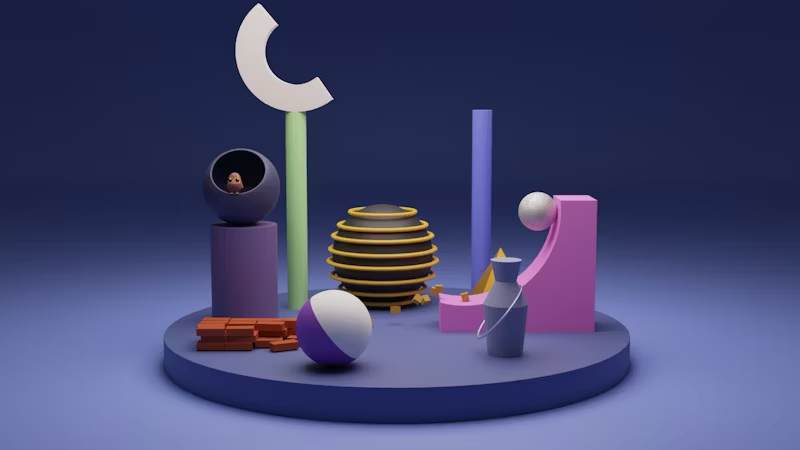
3D animation now exists beyond its traditional boundaries, which restricted its use to movies, video games, and elite film educational institutions. The development of browser technology, together with enhanced rendering capabilities, gives users a robust rendering solution that they can use to create interactive content for web applications. At present, companies utilize 3D web animation technology to build interactive online experiences that help users understand complicated subjects while maintaining their interest.
Web platforms face difficulties when they attempt to deliver high-resolution graphic content. Web platforms need optimization procedures that ensure their content runs efficiently on various devices and different web browsers, which creates a need for optimization work that differs from traditional rendering methods. The design process for interactive 3D animation requires designers to establish a strategic approach that determines the acceptable limits between visual excellence and operational efficiency.
The process of creating digital experiences that produce strong results depends on businesses and developers who need to understand web-based 3D animation optimization methods.
Importance of Web-Based 3D Animation
Enhancing User Engagement
Users today demand interactive displays that provide animated content that moves beyond traditional non-moving pictures. Interactive web content, together with dynamic website elements, creates a user experience that not only keeps visitors interested but also increases their website dwell time. 3D web animation creates immersive experiences that enable users to interact with content through interactive elements and 3D elements that enhance their visual experience.
Users control what they want to learn by using screen elements that let them test products through 360-degree viewing and access different areas of the virtual space, and use their body movements to start animations. People will participate more actively when they experience control because it creates feelings of curiosity. Basic visual content that provides no additional value to users will not keep users on a website.
Interactive elements enable users to concentrate their focus on specific content. The animation system uses its visual effects to protect users from being overwhelmed while showing them essential elements that create a deliberate path through an organized sequence of content. The process becomes more straightforward for users to navigate while they achieve a better experience during their complete solution journey.
Simplifying Complex Concepts
3D animation functions as an effective method to demonstrate products and processes and abstract ideas. Through motion and interactivity, users can explore concepts in a way that is easier to understand compared to traditional text or images.
Static content delivery methods face difficulties when technical products or services require multiple levels of information to be explained. Interactive 3D animation enables users to visually dissect complex content into simpler components. The users can examine particular parts of the system while they track operations and observe real-time relationships between various system elements.
The method enhances understanding while decreasing the requirement for extensive explanations. The method enables businesses to deliver information in a more effective way, which helps users to comprehend what they need to know. The method proves its value in technology, healthcare, and engineering fields, which need a precise understanding of their operations.
Technologies Behind Web 3D
WebGL and Real-Time Rendering
WebGL enables web browsers to display 3D graphics through its core technology, which operates without requiring users to install additional software. The platform enables developers to build highly detailed visual content that maintains functionality on various devices.
The main strength of WebGL lies in its capability to produce visual effects that appear in real time. Users can explore active virtual worlds because they experience interactive environments that react to their actions without any pre-recorded animations.
Real-time rendering is critical for interactive 3D animation because it provides viewers with an immersive experience. Users are not just watching content; they are actively engaging with it. Users can receive personalized content that adjusts according to their typical usage patterns, device specifications, and their methods of interacting with the system.
Three.js and Development Frameworks
Three.js is one of the most popular libraries used for building 3D web animations. The library lets users create WebGL projects through its collection of ready-to-use components, which include rendering tools and lighting systems, texture elements, and animation capabilities.
Three.js enables developers to create and operate 3D environments through its simplified interface, which eliminates the need for complicated fundamental programming. The system provides developers with an organized method to control system components, which include objects, cameras, and user interaction elements. The system enables teams to produce exceptional visual content while minimizing time requirements for essential foundation work.
Three.js frameworks enable users to manage system performance better. The developers control all aspects of animation performance by adjusting three elements, which include lighting and shadow effects and the level of detail used for objects. The system allows artists to work freely while developers maintain technical control over the system, which makes it effective for creating large interactive web-based systems.
Supporting Technologies
The integration of 3D content into web environments depends on HTML5, CSS, and JavaScript as essential technologies. The animation functions correctly throughout the website because WebGL and Three.js perform rendering, while these additional technologies support the process.
HTML5 provides the foundation for embedding 3D content into web pages, while CSS is used to style and position elements around the animation. JavaScript acts as the bridge that connects user interactions with the 3D environment, which enables users to perform tasks through clicking and scrolling to view animations and see real-time changes.
The combination of these technologies establishes an interactive 3D animation experience that users can access through their entire user interface. The system delivers better navigation capabilities, which increase responsiveness while users experience 3D elements as natural website components instead of additional features.
Optimizing Performance for Web Platforms
Reducing File Sizes
The process of optimization depends on reducing file sizes to achieve its most critical objective. The presence of large assets on a website causes loading delays, which create a detrimental effect on user experience. The use of compression, efficient file formats, and polygon count reduction techniques enables performance enhancements.
The performance of web pages decreases with every extra megabyte of data because slower networks and mobile devices face difficulties. The load times will experience substantial improvements through proper texture optimization methods, which include asset compression, modern format usage, and resizing textures to their required dimensions. The browser performance needs to handle three-dimensional models through polygon count reduction because detailed mesh designs create a heavy processing burden.
The aim of this project requires finding an optimal solution that provides both visual excellence and operational efficiency. The 3D web animation process remains seamless and accessible through optimized assets, which maintain the complete user experience.
Efficient Rendering Techniques
The performance of rendering systems will improve through optimization. The system achieves this goal through three methods, which include level of detail (LOD) implementation, unnecessary object elimination, and lighting and texture optimization.
The level of detail allows models to display in varying resolutions depending on how close they are to the camera. Objects that are farther away use simpler versions, reducing the computational load without affecting perceived quality. The browser uses culling techniques to block rendering of objects that users cannot see, thus conserving precious system resources.
The process of lighting and texture optimization holds equal significance. High-resolution textures and complex lighting setups create rendering challenges that require careful management to avoid performance issues. Developers achieve visual scene appeal through their lighting calculation simplifications and their use of optimized textures, which maintain system performance.
Responsive Design for Multiple Devices
The web-based 3D content needs to function properly on all devices, including desktops and smartphones. The system needs to implement design methods that adapt its performance capabilities according to the different device specifications.
People use various devices to access information because not everyone owns a powerful computer. Mobile devices have less processing capacity and memory than desktop computers do. Developers use responsive design techniques to create products that decrease 3D model detail and decrease texture quality while restricting specific visual effects on basic hardware.
The method guarantees that interactive 3D animation works properly and stays interesting for viewers on all platforms. Companies use device-based performance optimization to make their products reachable to more customers while maintaining product usability.
Managing Load Times
User retention depends on websites that load their content at high speeds. Users will stop viewing any animation content that takes excessive time to begin showing. The combination of lazy loading and progressive rendering techniques enables fast content delivery while preserving visual quality.
Lazy loading allows the system to load only essential components at first, while it loads subsequent components when they become necessary. Progressive rendering starts with low-resolution assets, which then receive upgrades through additional data processing. This method provides users with instant results, which leads to continuous user involvement from their first interaction with the platform.
The effective management of load times allows 3D web animation to provide users with an uninterrupted viewing experience. The system decreases user frustration, which leads to better user experiences and more content engagement from visitors.
Use Cases for Interactive 3D Content
Product Visualization
Businesses present their products through interactive 3D animations, which enable detailed product displays. The shopping experience becomes more interactive through users’ abilities to rotate, zoom, and examine products.
Education and Training
3D animation serves as a common teaching tool used by educational platforms to demonstrate difficult concepts to students. Users interact with interactive elements to visually discover educational material through exploration.
Marketing and Advertising
Interactive animations serve as efficient marketing tools because they attract viewers while prompting them to engage with the content. The animations enable brands to present their messages through interactive elements, which enhance audience retention.
Virtual Experiences
3D web animation creates experiences that include virtual tours and immersive storytelling that exist outside traditional content delivery methods. The technology proves beneficial to sectors including real estate, travel, and entertainment.
Best Practices for Deployment
Testing Across Platforms
The testing process needs to verify 3D animations on multiple browsers and devices before the system goes live. The process establishes testing requirements that need to be fulfilled before the system becomes operational.
Balancing Quality and Performance
Visuals need to meet high-quality standards, but they should maintain user-friendly functions. Successful deployment requires organizations to discover the optimal combination between operational performance and detailed technical requirements.
Ensuring Accessibility
All users must have access to interactive content. The development of accessible experiences requires organizations to implement multiple navigation methods together with assistive technology compatibility measures.
Continuous Optimization
The process of optimizing content needs to continue indefinitely. Your interactive 3D animation will maintain its effectiveness through time if you monitor performance and make enhancements based on user feedback.
Conclusion & Call to Action
Digital experiences are advancing into a future where 3D web animation serves as a compelling instrument for creating customer connections, enabling better communication, and driving new advancements. The process of website transformation into interactive spaces that maintain user interest while delivering beneficial content requires proper optimization of interactive elements.
The process of achieving optimal visual results while maintaining system performance needs professionals who possess expertise, together with an appropriate selection of tools. Businesses need to develop interactive 3D animations through performance optimization methods, which enable their content to function seamlessly on different types of devices.
You can enhance your online presence through premium 3D animation services, which Delta Animations provides to create interactive web content that brings your concepts into reality.